
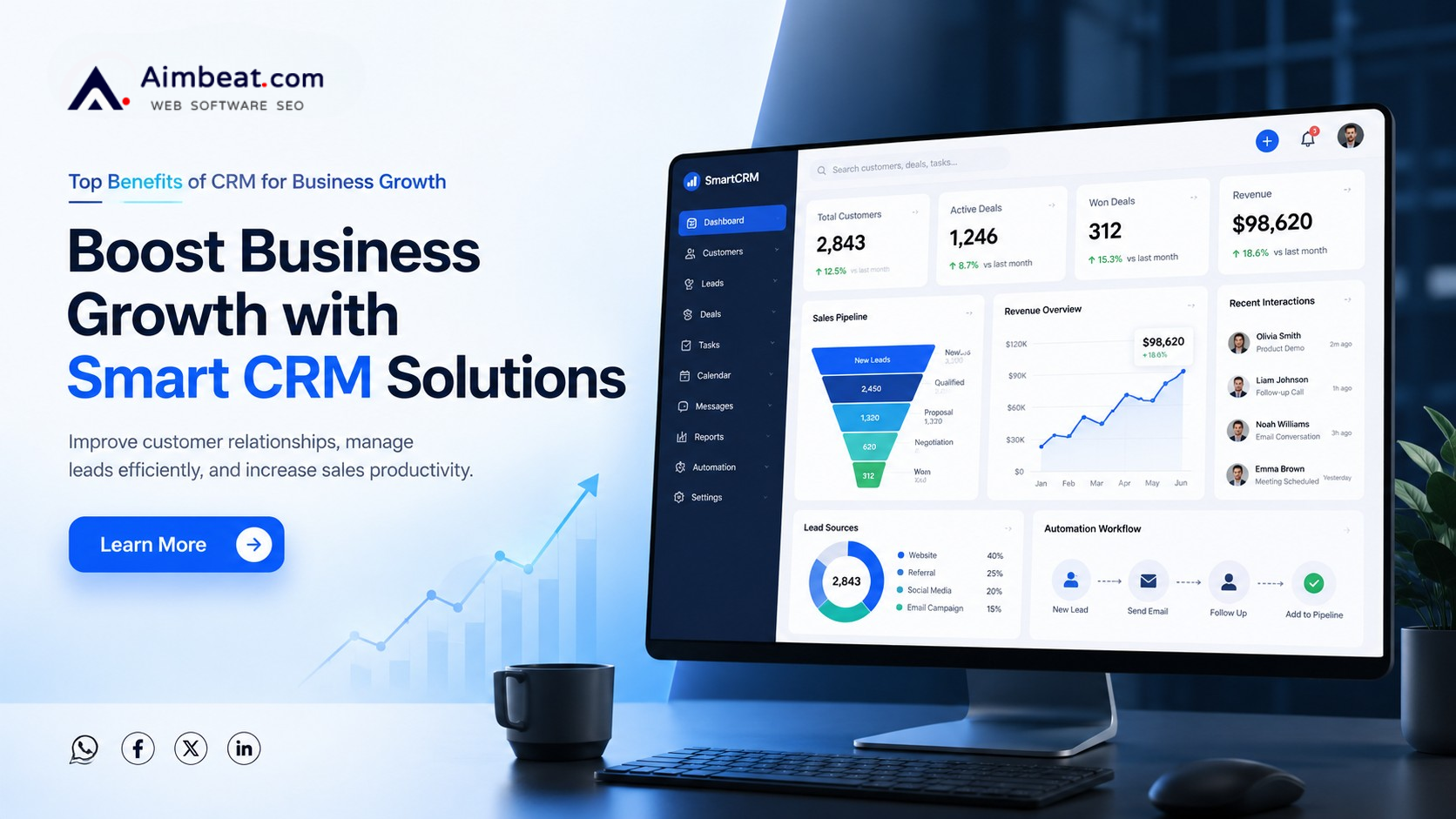
Managing customer relationships becomes more challenging as a business starts growing. Customer inquiries increase, sales conversations happen across different platforms, and teams often struggle to keep track of leads, follow-ups, and communication history. This is where CRM software becomes an important part of business growth.
Many businesses lose valuable opportunities simply because their customer data is scattered across spreadsheets, emails, WhatsApp chats, or manual notes. Without a proper system, it becomes difficult to manage leads, improve customer experience, and scale operations efficiently.
This is one of the biggest reasons why businesses today are investing in custom CRM software solutions to streamline customer management, automate workflows, and improve overall productivity.
In this blog, we will explore the top benefits of CRM for business growth, how CRM systems help businesses improve customer relationships, and why CRM software has become essential for modern businesses looking to grow faster and operate more efficiently.
What is CRM and How Does It Work?
CRM stands for Customer Relationship Management. It is a software system designed to help businesses manage customer interactions, sales activities, lead tracking, communication history, and customer data from one centralized platform.
Instead of storing information manually across different tools, a CRM system keeps everything organized in one place. This helps sales teams, support teams, and business owners access customer information quickly and manage relationships more effectively.
A CRM system typically helps businesses with:
- Lead management
- Customer communication tracking
- Sales pipeline management
- Task automation
- Customer support management
- Reporting and analytics
Businesses using business CRM software often experience better organization, improved communication, and faster decision-making because all important customer information remains accessible and structured.
As businesses grow, managing customers manually becomes difficult. This is why many companies choose professional CRM software development services to build systems that fit their exact workflow and business goals.

Why CRM is Important for Modern Businesses
Modern businesses operate in a highly competitive environment where customer experience plays a major role in business success. Customers expect faster responses, personalized communication, and better support. Businesses that fail to manage customer relationships properly often struggle with customer retention and sales growth.
Without CRM software, companies commonly face problems such as:
- Missing follow-ups
- Poor lead tracking
- Disorganized customer records
- Slow communication between teams
- Difficulty managing sales pipelines
- Lack of customer insights
Traditional methods like Excel sheets or manual customer tracking may work initially, but they usually create confusion as the business grows.
CRM systems help businesses solve these challenges by centralizing customer information and improving operational efficiency. Businesses can track every interaction, assign tasks automatically, manage sales opportunities, and improve customer communication from a single dashboard.
This is one of the major benefits of CRM for business growth because it helps businesses stay organized while improving both customer satisfaction and internal productivity.
Also read this: CRM Software Cost in India: Complete Guide for Businesses (2026)
Top Benefits of CRM for Business Growth
Better Customer Relationship Management
One of the biggest benefits of CRM for business growth is improved customer relationship management.
Customers prefer businesses that understand their needs, respond quickly, and maintain consistent communication. CRM software helps businesses store complete customer history, including previous interactions, inquiries, purchases, and support requests.
This allows businesses to provide more personalized communication and better customer experiences.
For example, if a customer contacts your business again after several months, your team can quickly access previous conversations and provide faster assistance without asking the customer to repeat everything again.
Better customer relationships often lead to:
- Higher customer satisfaction
- Increased trust
- More repeat business
- Better customer retention
- Stronger brand reputation
Businesses that focus on long-term customer relationships usually grow faster than businesses that only focus on short-term sales.
Improved Lead Management
Lead management is another important area where CRM systems create a major impact.
Many businesses lose potential customers simply because they fail to track inquiries properly or forget to follow up at the right time. CRM software helps businesses organize leads, monitor sales activities, and track every stage of the customer journey.
With proper lead management software, businesses can:
- Capture leads from multiple channels
- Assign leads to sales teams
- Set automatic follow-up reminders
- Track lead progress
- Improve conversion rates
This helps businesses reduce missed opportunities and improve sales performance.
Companies that invest in effective lead management software often experience better sales organization and more consistent lead nurturing processes.
Increased Sales and Revenue
One of the primary reasons businesses invest in CRM software is to improve sales performance.
CRM systems provide sales teams with better visibility into customer behavior, lead stages, pending follow-ups, and conversion opportunities. This makes it easier to prioritize high-value leads and close deals faster.
CRM software also helps businesses identify:
- Upselling opportunities
- Cross-selling opportunities
- High-performing sales channels
- Customer buying patterns
When sales teams have access to accurate customer information, they can communicate more effectively and improve conversion rates.
This directly contributes to business growth with CRM because businesses can increase revenue while improving customer experiences at the same time.
Improved Team Productivity
Manual processes consume a significant amount of time for growing businesses. Employees often spend hours updating spreadsheets, tracking customer conversations manually, or searching for information across multiple platforms.
CRM systems simplify these processes through automation and centralized data management.
Businesses using CRM software can automate:
- Task assignments
- Follow-up reminders
- Email notifications
- Customer status updates
- Workflow management
This reduces repetitive work and allows teams to focus more on business growth activities.
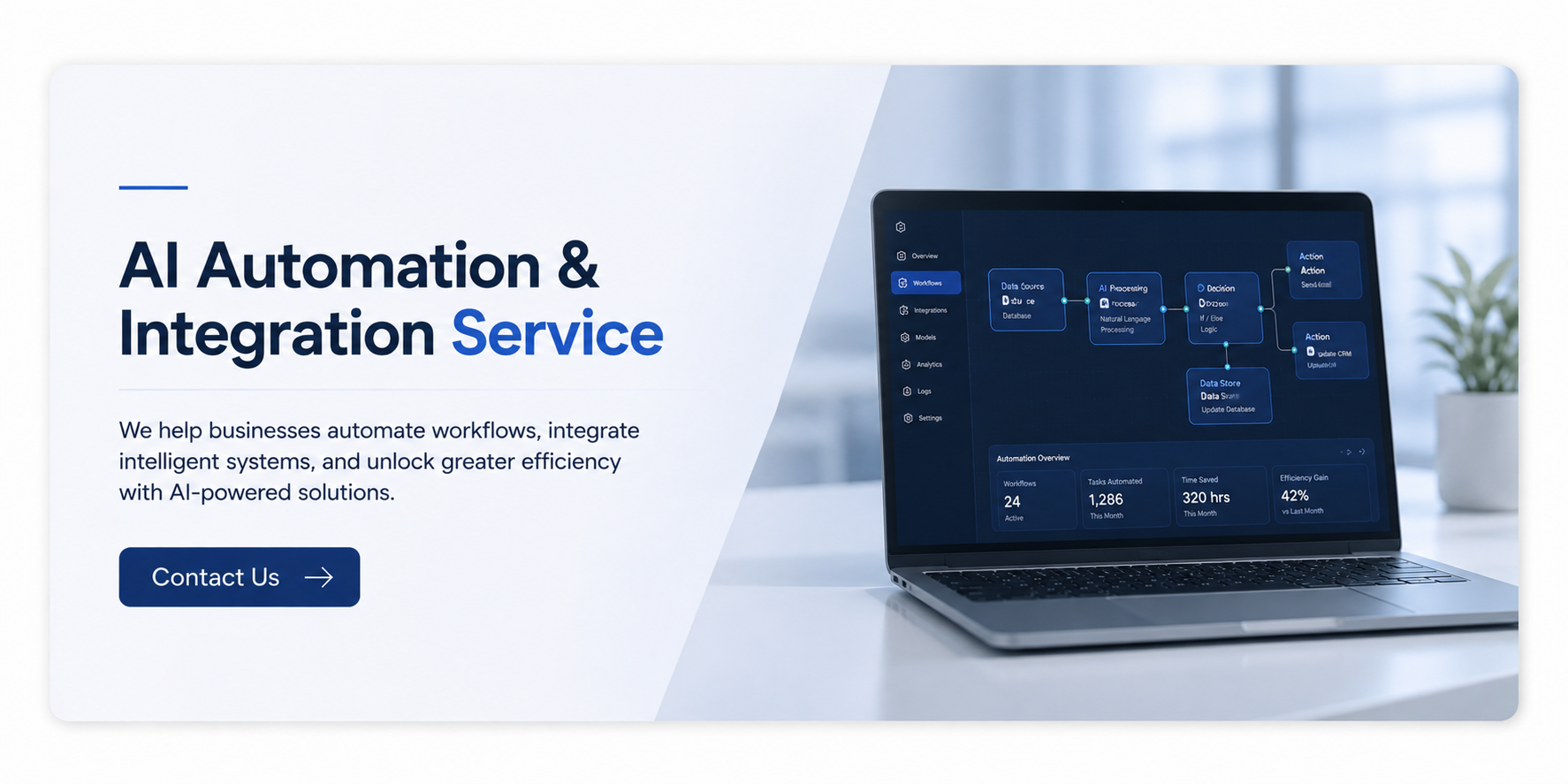
Modern businesses are also integrating CRM platforms with AI automation solutions to improve efficiency even further. AI-powered automation helps businesses handle repetitive tasks faster while improving response times and operational accuracy.
Better Customer Support Experience
Customer support plays an important role in customer retention and business reputation. A delayed response or poor communication experience can negatively impact customer trust.
CRM systems help support teams access customer information instantly, which improves issue resolution speed and communication quality.
Support teams can:
- Track customer complaints
- Monitor support requests
- Access previous communication history
- Assign tickets to the right departments
- Improve response management
When businesses provide faster and more organized customer support, they create stronger customer loyalty and improve overall customer satisfaction.
Stronger Customer Retention
Acquiring new customers is important, but retaining existing customers is equally valuable for long-term business growth.
CRM software helps businesses maintain regular communication with customers through reminders, email campaigns, follow-ups, and personalized interactions.
Businesses that consistently engage with customers often experience:
- Better customer loyalty
- Increased repeat purchases
- Higher customer lifetime value
- More referrals
This is one of the most overlooked benefits of CRM software for small businesses because customer retention often costs less than acquiring new customers.
Better Business Decision Making
Business growth depends heavily on data-driven decision-making. CRM systems provide valuable insights into customer behavior, sales performance, lead conversion, and team productivity.
Businesses can use CRM analytics to understand:
- Which marketing campaigns perform best
- Which products generate more interest
- Where sales opportunities are getting delayed
- Which teams are performing efficiently
With accurate reporting and analytics, businesses can make smarter decisions and improve growth strategies.
Many growing companies also integrate CRM systems with ERP software solutions to improve operational visibility across departments such as sales, inventory, finance, and customer management.
How CRM Helps Small Businesses Grow Faster
Small businesses often operate with limited resources, which makes efficiency extremely important. Managing customer relationships manually becomes difficult as customer inquiries and sales activities increase.
CRM software helps small businesses organize operations without requiring large teams or complex systems.
Small businesses using CRM systems can:
- Track leads more efficiently
- Improve customer communication
- Automate repetitive tasks
- Monitor sales performance
- Improve customer retention
This allows businesses to scale operations more smoothly while maintaining better customer service quality.
Many startups and growing businesses also prefer customized software development because it allows them to build CRM systems tailored to their specific workflow and industry requirements.
Real Business Problems CRM Can Solve
CRM software helps businesses solve several common operational problems that often slow down growth.
One of the biggest issues businesses face is scattered customer information. Customer conversations may exist across emails, WhatsApp chats, spreadsheets, and phone calls, making it difficult for teams to stay organized.
CRM systems solve this by centralizing all customer information in one place.
Another common problem is missed follow-ups. Businesses often lose sales opportunities simply because sales teams forget to reconnect with leads at the right time. CRM systems automate reminders and follow-up scheduling, reducing the chances of losing valuable customers.
CRM software also improves internal communication between departments. Sales teams, support teams, and management can access shared customer information, which improves collaboration and reduces confusion.
Businesses that struggle with operational inefficiencies often work with experienced software consulting services providers to identify the right CRM strategy for their business model.
Industries That Benefit Most from CRM Software
CRM systems are useful across multiple industries because customer management is important for almost every business.
Real estate companies use CRM systems to manage property inquiries, follow-ups, and customer communication.
Healthcare businesses use CRM software to improve patient management and appointment coordination. Companies offering healthcare software and mobile app development often integrate CRM features for better patient engagement.
Ecommerce businesses use CRM systems to track customer behavior, automate marketing campaigns, and improve customer retention.
Educational institutions also use CRM platforms for student management, admissions tracking, and communication workflows.
Service-based businesses, logistics companies, and software companies also rely heavily on CRM software for operational efficiency and customer relationship management.
Key Features to Look for in a CRM System
Choosing the right CRM system is important because every business has different operational needs.
Some of the most important CRM features include:
- Contact management
- Lead tracking
- Sales pipeline management
- Workflow automation
- Reporting and analytics
- Mobile accessibility
- Third-party integrations
Businesses should also look for CRM systems that support integrations with email platforms, WhatsApp communication tools, ERP systems, and marketing automation platforms.
Cloud-based CRM platforms have become increasingly popular because they provide flexibility, remote access, and easier scalability.
Businesses planning scalable CRM solutions often invest in SaaS product development to build cloud-based CRM applications that support long-term growth.

Cloud CRM vs Traditional CRM Systems
Cloud CRM systems allow businesses to access customer information from anywhere using internet-based platforms. Traditional CRM systems usually require local infrastructure and internal server management.
Most modern businesses now prefer cloud CRM solutions because they offer:
- Better accessibility
- Lower infrastructure costs
- Easier updates
- Remote team support
- Improved scalability
Cloud CRM systems are especially useful for businesses with remote teams or multiple office locations.
Businesses developing modern CRM dashboards and customer portals often rely on professional web application development services to build secure and scalable systems.
Signs Your Business Needs a CRM System
Many businesses delay CRM adoption until operational problems become difficult to manage.
Some common signs your business may need a CRM system include:
- Customer information is scattered
- Sales follow-ups are inconsistent
- Teams struggle with communication
- Lead tracking feels disorganized
- Business growth becomes difficult to manage
- Customer support response times are slow
If these challenges continue for a long time, they can directly affect customer satisfaction and revenue growth.
Working with an experienced software development company can help businesses identify the right CRM solution based on their industry, goals, and operational workflow.
Common CRM Implementation Challenges
Although CRM systems provide many advantages, implementation requires proper planning.
Some businesses face challenges such as:
- Employee resistance to new systems
- Poor CRM training
- Choosing unnecessary features
- Data migration issues
- Lack of clear implementation strategy
These challenges can usually be avoided by selecting the right CRM development approach and ensuring proper team training.
Businesses implementing CRM systems for large-scale operations often benefit from scalable enterprise software solutions that support long-term business growth and operational flexibility.
Future of CRM Systems in Business Growth
CRM technology continues evolving as businesses adopt automation, AI tools, and data-driven customer management strategies.
Modern CRM platforms are now using:
- AI-powered analytics
- Smart workflow automation
- Predictive customer insights
- Omnichannel communication systems
- Personalized customer engagement
Businesses that adopt modern CRM strategies early often gain a competitive advantage because they can respond faster, improve customer experiences, and scale operations more efficiently.
Companies developing future-ready CRM platforms also invest heavily in automation and intelligent customer management tools to improve business efficiency.
Final Thoughts
The benefits of CRM for business growth go far beyond customer data management. CRM systems help businesses improve customer relationships, organize operations, increase productivity, strengthen lead management, and improve overall business efficiency.
As customer expectations continue increasing, businesses need systems that help them manage communication, automate workflows, and make better business decisions.
Whether you are a startup, small business, or growing enterprise, investing in the right CRM solution can create long-term operational and sales advantages.
Businesses planning to build scalable customer management systems often work with experienced teams offering custom CRM software development, automation services, and enterprise business solutions tailored to their specific business goals.
If you are planning to improve customer management, automate workflows, or build a scalable CRM platform for your business, you can always contact our team to discuss your requirements and explore the right solution for your business growth.
Frequently Asked Questions About CRM
What are the main benefits of CRM?
CRM helps businesses improve customer relationships, manage leads efficiently, automate workflows, improve team productivity, and increase sales performance.
How does CRM help business growth?
CRM systems improve customer management, lead tracking, sales organization, and business automation, which helps businesses grow more efficiently.
Is CRM useful for small businesses?
Yes, CRM software is highly useful for small businesses because it helps organize customer communication, improve follow-ups, and increase operational efficiency without requiring large teams.
Can CRM improve customer retention?
Yes, CRM systems help businesses maintain regular communication, provide personalized experiences, and improve customer satisfaction, which supports stronger customer retention.
What industries use CRM software?
CRM software is used across industries including real estate, healthcare, ecommerce, education, logistics, software development, and service businesses.
What is the difference between CRM and ERP?
CRM focuses mainly on customer relationship management and sales activities, while ERP systems manage broader business operations such as finance, inventory, and production.
Can CRM automate business processes?
Yes, modern CRM systems can automate tasks such as follow-ups, notifications, workflow management, lead assignments, and customer communication processes.


