
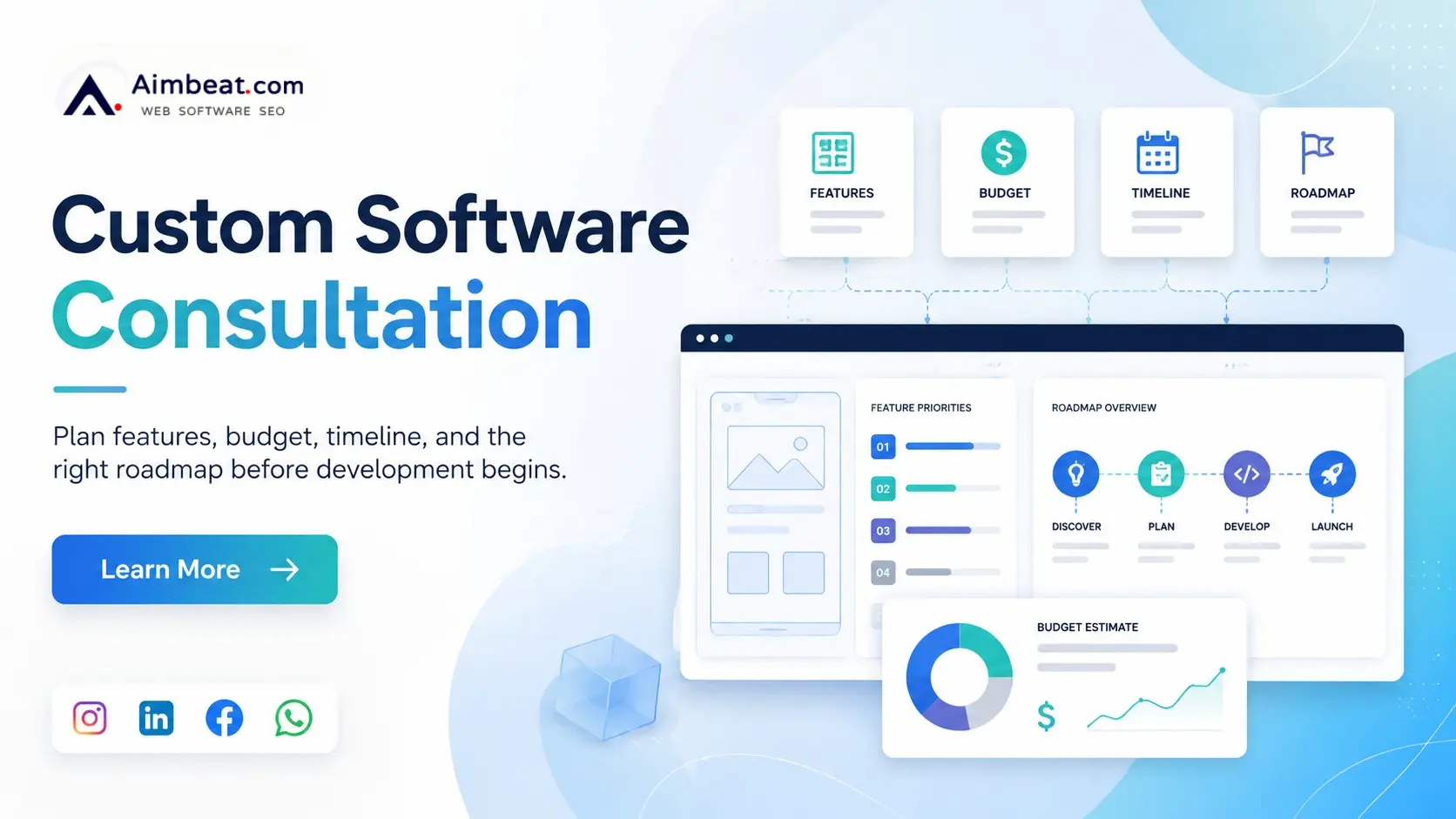
Starting a custom software project without clear planning can lead to extra costs, missed deadlines and features that do not solve the real business problem.
A professional software consultation for custom software development helps you understand what needs to be built, how it should work, which features are essential and how much time and investment may be required.
It turns a rough software idea into a clear, practical development plan.
What Is a Custom Software Consultation?
A custom software consultation is a structured discussion between your business team and a software consultant.
The purpose is not to immediately start development. It is to understand your business process, current challenges, users, data, integrations and future goals before deciding the right software solution.
During the consultation, the consultant studies how your business currently operates and identifies where custom software can reduce manual work, improve control or connect disconnected processes.
A proper consultation should help answer important questions such as:
- What business problem should the software solve?
- Who will use the system?
- Which features are required first?
- Which existing tools must be integrated?
- Should you build a web app, mobile app or both?
- What budget and timeline may be required?
Software consultation defines what should be built and why. Software development begins after the scope and direction are clear.
When Does a Business Need Software Consultation?
Software consultation is useful when a business knows there is a problem but is not fully sure what the right solution should be.
You may need a consultation when employees are managing daily operations through spreadsheets, emails, WhatsApp messages or separate software systems. These methods may work for a small team, but they often become difficult to manage as the business grows.
A consultation is also useful when your existing software does not match your workflow. You may need better reports, custom approval processes, user permissions, integrations or automation that standard software cannot provide.
Businesses usually consider custom software consulting services in situations such as:
- Replacing spreadsheets and manual processes
- Connecting sales, finance, HR or operations
- Modernising outdated software
- Building a new software product
- Creating a customer, employee or vendor portal
- Developing a CRM, ERP, HRMS or workflow system
- Integrating multiple business applications
A software consultant can also help you decide whether custom development is necessary or whether an existing software product can meet your needs.

What Happens During a Custom Software Consultation?
A professional consultation goes beyond a short sales call. It follows a clear discovery and planning process.
Understanding the Business Problem
The first step is to understand why the business needs software.
Instead of starting with a feature list, the consultant should ask about the actual problem. For example, the issue may be delayed approvals, repeated data entry, poor reporting, disconnected departments or difficulty tracking customer activity.
Understanding the problem helps ensure that the proposed software creates a meaningful business result.
Analysing the Current Workflow
The consultant reviews how work is currently managed.
This includes understanding how a process starts, who is responsible for each task, where information is stored, how approvals are completed and where delays usually happen.
For example, if a company wants sales management software, the consultant may study how leads are received, assigned, followed up, converted and reported.
This workflow analysis helps identify which steps should be automated and which processes may need improvement before development begins.
Identifying Users and Access Levels
Different users may need different features and permissions.
A manager may need access to reports and approvals, while an employee may only need to update assigned tasks. Customers, vendors, administrators and external partners may also require separate access.
Defining user roles early helps avoid confusion during development and improves software security.
Reviewing Existing Software and Data
Most businesses already use some form of software, spreadsheet or database.
The consultant should review the current systems and understand whether the new software needs to connect with them.
This may include:
- CRM or ERP software
- Accounting systems
- Payment gateways
- Email and WhatsApp services
- Existing databases
- Cloud storage
- Third-party APIs
The consultation should also identify whether existing data needs to be cleaned, transferred or reorganised.
Defining and Prioritising Features
Business needs are then converted into software features.
These may include dashboards, reports, user management, notifications, approvals, document management, task tracking, inventory control or customer portals.
However, every feature does not need to be developed in the first phase.
A good consultant separates features into three categories:
Must-have features solve the main business problem and are required for launch.
Should-have features improve the system but can be added after the core software is working.
Future features support long-term growth and can be included in later development phases.
This approach keeps the first version focused and helps control development cost.

MVP or Complete Software: Which Is Better?
The right approach depends on the type of project.
An MVP, or minimum viable product, is suitable when a startup or business wants to test an idea with essential features before making a larger investment.
A complete system may be more suitable when the software will manage important business operations and must support multiple departments from the beginning.
For example, a startup may first launch a basic customer booking platform. A growing company replacing its existing ERP may need a more complete solution with finance, inventory, users, approvals and reports.
The consultation helps determine which approach is practical based on business risk, budget and project goals.
How Is the Right Technology Selected?
Technology should be selected according to the project requirements, not only because a framework or platform is currently popular.
The consultant considers factors such as:
- Number of users
- Software complexity
- Expected data volume
- Required integrations
- Security needs
- Performance
- Future scalability
- Maintenance requirements
- Available budget
The consultation should also determine whether the solution should be a web application, mobile application or both.
A web application may be suitable for office teams and administrators. A mobile app may be necessary for field staff, customers, delivery teams or users who need access while travelling.
In some projects, third-party tools and APIs can reduce development time. In other cases, developing a feature from scratch provides better control and flexibility.
Can Software Consultation Estimate Cost and Timeline?
Yes, but a reliable estimate requires clear requirements.
A software development company cannot provide an accurate estimate based only on a sentence such as, “We need an ERP” or “We want an app similar to another platform.”
The cost of custom software depends on several factors, including the number of modules, user roles, feature complexity, integrations, reports, data migration, security and testing.
The timeline may include:
- Discovery and planning
- UI and UX design
- Development
- API integration
- Testing
- Deployment
- Training
- Post-launch support
An early estimate is usually provided as a range. It becomes more accurate after the features, workflows and technical requirements are properly documented.
A transparent consultant should explain the factors behind the estimate instead of promising an unrealistic fixed cost or delivery date.
What Should You Prepare Before the Consultation?
You do not need to prepare a complete technical document. However, sharing clear business information will make the consultation more productive.
Start by describing the problem you want to solve. Explain how the work is currently managed and what difficulties your team faces.
You should also share information about:
- Current software and spreadsheets
- Expected users and departments
- Important reports and dashboards
- Required integrations
- Existing data
- Preferred launch timeline
- Available budget range
- Similar software examples
Reference software can help the consultant understand your expectations, but the final solution should be designed around your own business process.
What Should You Receive After the Consultation?
A useful software consultation should provide more than a verbal recommendation.
Depending on the project, the consultation may result in:
Business Requirement Summary
A clear explanation of the business problem, objectives, users and expected results.
Recommended Software Solution
A practical description of how the proposed software will solve the identified challenges.
Prioritised Feature List
A structured list of core features, secondary features and future improvements.
User Roles and Workflow Plan
Details about who will use the software, what they can access and how tasks will move through the system.
Integration and Data Requirements
A list of platforms, APIs, databases and third-party systems that must be connected.
Technical Recommendation
Guidance on the most suitable platform, architecture and technology approach.
Development Roadmap
A phase-wise plan covering design, development, testing, deployment and future improvements.
Estimated Cost and Timeline
A realistic estimate based on the current level of requirement clarity.
These deliverables help the business compare proposals, plan the investment and reduce confusion before development starts.

How Software Consultation Reduces Development Risk
Poorly planned software projects often fail because the business and technical teams have different expectations.
Consultation reduces this risk by creating clarity before money and time are invested in development.
It helps prevent unnecessary features, unclear scope and repeated changes. It also identifies technical challenges related to data migration, security, integrations and performance.
A phase-wise roadmap improves budget control and makes it easier to measure progress.
Most importantly, consultation creates alignment between business users and the software development team. Business needs are converted into clear workflows, features and technical requirements that developers can understand and build correctly.
Common Mistakes Before Starting Custom Software Development
One common mistake is starting with a large feature list instead of defining the actual business problem.
Another mistake is trying to build every possible feature in the first version. This increases cost, extends the timeline and makes testing more difficult.
Businesses may also select technology too early, ignore integration requirements or choose a software development company only because it offers the lowest price.
Starting development without proper requirements is another major risk. It can lead to scope changes, rework and disagreements later.
A structured consultation helps avoid these problems before they affect the project.
Questions to Ask a Custom Software Consultant
Before selecting a consultant or development company, ask questions that show how they plan and manage projects.
Important questions include:
- How will you understand our current workflow?
- How do you identify and prioritise features?
- Will you review our existing software and data?
- How will you plan integrations?
- What documents will we receive?
- How will you estimate cost and timeline?
- How do you manage requirement changes?
- Who will own the source code and project data?
- How will the software support future growth?
- Can your team also handle development and support?
Clear answers to these questions can help you identify whether the company has a genuine consultation process or is simply trying to start development quickly.
How to Choose the Right Software Consulting Company
Choose a company with experience in custom business software, not only basic websites or applications.
The consulting team should ask detailed questions about your users, workflow, data, reports and long-term goals.
They should be able to explain technical recommendations in simple language and connect each proposed feature with a business need.
The company should also be transparent about project scope, cost, timeline, ownership and ongoing support.
It is helpful to work with a team that can manage the complete process, including consultation, UI and UX design, development, testing, deployment and maintenance.
What Happens After the Software Consultation?
After the consultation, the requirements are reviewed and approved.
The next stage may include wireframes, user flows or interface designs. The technical architecture and development plan are then finalised.
Once the proposal and scope are approved, development begins in planned phases.
The software is tested regularly, and users may provide feedback before the final launch. After deployment, the team may also require training, maintenance and future improvements.
This structured process makes custom software development more predictable and easier to manage.
Who Can Benefit From Custom Software Consultation?
Custom software consultation is suitable for businesses that want to:
- Replace manual processes
- Automate approvals and workflows
- Connect different departments
- Build an internal management system
- Develop a software product
- Modernise legacy software
- Create a customer or employee portal
- Integrate existing applications
- Plan CRM, ERP, HRMS or reporting software
It is useful for startups validating an idea, SMEs improving operations and enterprises planning large system integrations.
Final Takeaway
Custom software development should not begin with coding. It should begin with a clear understanding of the business problem, users, workflow, features, data and expected results.
A professional software development consultation helps you make the right decisions before investing in design and development.
It gives your business a clear scope, realistic budget, practical timeline and structured development roadmap.
Get a Free Software Consultation
Discuss your business process, software requirements and project goals with an experienced custom software development team.
A focused consultation can help you identify the right features, technology, integrations, development phases and next steps before you make a major investment.


