
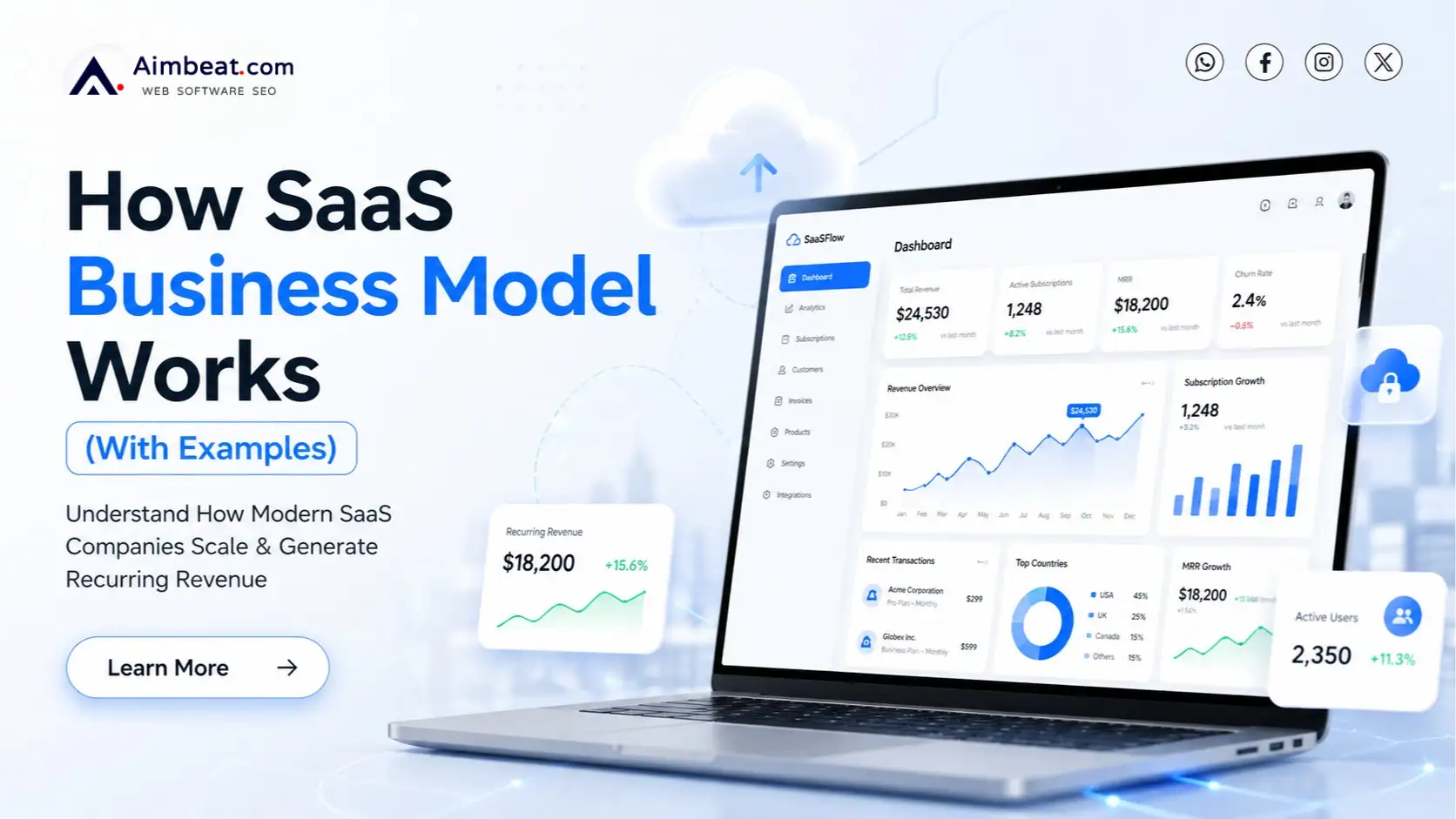
Software as a Service (SaaS) has completely changed the way businesses use software today. From startups to large enterprises, companies now prefer cloud-based software because it is flexible, affordable, and easy to use. Instead of installing software on a computer, users can access SaaS applications directly through the internet using a browser or mobile app.
Many popular platforms like Salesforce, Zoom, Slack, Shopify, Canva, and Google Workspace use the SaaS business model to deliver services to millions of users worldwide. This model helps businesses generate recurring revenue while offering customers continuous updates, support, and easy accessibility.
In this guide, you will learn how the SaaS business model works, how SaaS companies make money, different SaaS pricing models, key benefits, challenges, and real examples of successful SaaS businesses.
Businesses planning to build scalable cloud platforms often work with a SaaS product development company to create secure and user-friendly software solutions tailored to their business needs.
What Is SaaS Business Model?
The SaaS business model is a cloud-based software delivery method where users pay a monthly or yearly subscription fee to access software online. Instead of buying software with a one-time payment, customers subscribe to the service and use it through the internet.
In simple words, SaaS allows businesses and individuals to use software without worrying about installation, maintenance, or manual updates.
Popular examples of SaaS software include Salesforce, Shopify, Canva, Dropbox, and Microsoft 365. Most modern businesses prefer software as a service because it reduces infrastructure costs and improves flexibility.
Many organizations now invest in custom software development solutions to build SaaS platforms that match their business operations and customer requirements.
Traditional Software vs SaaS Software
| Traditional Software | SaaS Software |
| One-time purchase | Subscription-based |
| Installation required | Cloud-based access |
| Manual updates | Automatic updates |
| Limited device access | Accessible anywhere |
| Higher maintenance cost | Lower maintenance |
How SaaS Business Model Works
The SaaS business model works through cloud infrastructure and subscription-based access. Users simply create an account, select a plan, and start using the software online.
First, customers register on the platform using their email or mobile number. After registration, they select a monthly or yearly subscription plan based on their requirements. Once subscribed, the software becomes accessible through browsers, web portals, or mobile applications.
Most modern SaaS platforms are developed using professional web application development services to ensure fast performance, security, and scalability.
The software is hosted on secure cloud servers, allowing businesses to manage customer data, software performance, and uptime efficiently. Companies also use secure cloud hosting solutions to maintain software reliability and improve user experience.
One of the biggest advantages of SaaS software is automatic updates. Users always receive the latest features, bug fixes, and security improvements without manually updating the software.

Key Components of SaaS Business Model
A successful SaaS business model depends on several important elements working together smoothly.
- Subscription Revenue: Recurring monthly or yearly payments help SaaS companies generate stable and predictable income.
- Cloud Infrastructure: Cloud technology allows users to access software from anywhere using internet-connected devices.
- Customer Retention: Long-term customer retention is one of the biggest growth drivers for SaaS businesses. Better support and product improvements help reduce customer churn.
- Product Scalability: SaaS platforms can easily scale as the number of users increases.
- Automation & AI Integration: Modern SaaS companies now integrate AI integration and automation services to improve productivity, reporting, and customer experience.
Types of SaaS Pricing Models
Pricing plays a major role in the success of any SaaS business. Different pricing models help companies attract startups, enterprises, and individual users.
- Freemium Model: Users get limited features for free and can upgrade later for premium features. Canva is a popular example of this model.
- Monthly Subscription Model: Customers pay monthly fees to continue using the software platform.
- Annual Subscription Model: Businesses offer yearly pricing plans at discounted rates to improve long-term customer retention.
- Per User Pricing: Pricing depends on the number of users accessing the software. Many collaboration tools follow this pricing strategy.
- Enterprise Pricing: Large organizations often require custom pricing, advanced features, and dedicated support.
Businesses offering CRM software development and ERP software development company services commonly use subscription-based SaaS pricing models for enterprise customers.
Real Examples of SaaS Companies
Understanding real SaaS examples helps explain how this business model works in practical situations.
Salesforce provides cloud-based CRM software for managing customer relationships and sales operations. Zoom became one of the most popular SaaS platforms for online meetings and virtual communication. Shopify helps businesses build and manage online stores without technical complexity.
HubSpot offers marketing and customer management tools through subscription-based plans, while Canva provides easy-to-use online graphic design software for businesses and individuals.
These companies became successful because they focused on scalability, customer experience, recurring revenue, and continuous software improvements.
Today, many businesses partner with an enterprise software development company to build scalable SaaS platforms for their own industries.
Benefits of SaaS Business Model
The SaaS business model offers several advantages for both businesses and customers.
One of the biggest benefits is lower initial investment. Businesses can start using software without spending large amounts on hardware and infrastructure. SaaS platforms also allow remote accessibility, making it easier for teams to work from different locations.
Automatic software updates reduce maintenance work and improve security. SaaS platforms also support better scalability, allowing businesses to expand operations smoothly.
Many companies also integrate software support and maintenance services to improve platform performance, customer satisfaction, and long-term stability.

Challenges in SaaS Business Model
Although SaaS offers many advantages, businesses still face some common challenges.
Customer retention remains one of the biggest concerns because users can easily switch to competitors if the product experience is poor. Data security is also extremely important because SaaS platforms store large amounts of customer information online.
Infrastructure costs can increase as businesses scale and support more users. Continuous product improvements are necessary to remain competitive in the SaaS market.
Businesses often use SaaS project consulting and software consulting services to improve scalability, infrastructure planning, and long-term SaaS growth strategies.
SaaS Business Model for Startups
Many startups prefer the SaaS business model because it offers long-term growth opportunities and recurring income.
Instead of selling software once, SaaS businesses continuously earn revenue through subscriptions. This creates better financial stability and predictable growth.
Startups usually begin by identifying a real business problem and developing an MVP (Minimum Viable Product). After gathering user feedback, they improve the platform gradually.
Building a successful SaaS platform also requires excellent user experience and scalable architecture. Many startups now invest in UI/UX design services to improve customer engagement and retention.
SaaS vs Traditional Software
Businesses often compare SaaS software with traditional software before making investment decisions.
| SaaS Software | Traditional Software |
| Subscription-based | One-time purchase |
| Cloud access | Device installation |
| Automatic updates | Manual updates |
| Flexible scaling | Limited scalability |
| Lower upfront cost | Higher initial cost |
Modern organizations now prefer custom web portal development solutions that support cloud-based SaaS functionality and remote accessibility.
Future of SaaS Business Model
The SaaS industry continues to grow rapidly because businesses are focusing more on automation, cloud computing, and digital transformation.
AI-powered SaaS platforms are becoming more common across industries like healthcare, logistics, education, finance, and real estate.
Mobile accessibility is also becoming extremely important. Businesses now expect SaaS platforms to work smoothly on smartphones and tablets.
Companies offering mobile app development company services help businesses create mobile-friendly SaaS applications for Android and iOS users.
Organizations also invest in Android app development services and iOS app development company solutions to improve customer accessibility and engagement.

Why Businesses Invest in SaaS Development
SaaS software helps businesses improve productivity, automate operations, reduce manual work, and increase customer engagement.
From startups to large enterprises, businesses are investing heavily in cloud-based platforms because they support flexibility, scalability, and long-term digital growth.
Companies looking for scalable software solutions often partner with a software development company in Mumbai to build secure and customized SaaS platforms based on their business goals.
Frequently Asked Questions
Q1. What is SaaS business model?
The SaaS business model is a subscription-based software delivery system where users access software online through cloud infrastructure.
Q2. How do SaaS companies make money?
SaaS companies generate recurring revenue through monthly or yearly subscription plans.
Q3. What are examples of SaaS companies?
Popular SaaS companies include Salesforce, Shopify, Zoom, Slack, Canva, and HubSpot.
Q4. Why is SaaS business model popular?
SaaS software is affordable, scalable, accessible from anywhere, and requires lower maintenance compared to traditional software.
Q5. Is SaaS profitable?
Yes, SaaS businesses can become highly profitable because of recurring revenue and customer retention.
Q6. How much does SaaS development cost?
The development cost depends on features, technology stack, scalability, and project complexity.
Final Thoughts
The SaaS business model has become one of the fastest-growing software business models worldwide. Its flexibility, recurring revenue structure, scalability, and cloud-based accessibility make it a preferred choice for modern businesses.
From startups to enterprises, companies are investing in SaaS software to improve efficiency, automate operations, and deliver better customer experiences.
If you are planning to build a scalable SaaS platform, choosing the right development strategy and technology partner is extremely important for long-term success.
You can also explore software development case studies to understand how businesses are building scalable SaaS solutions across different industries.


