
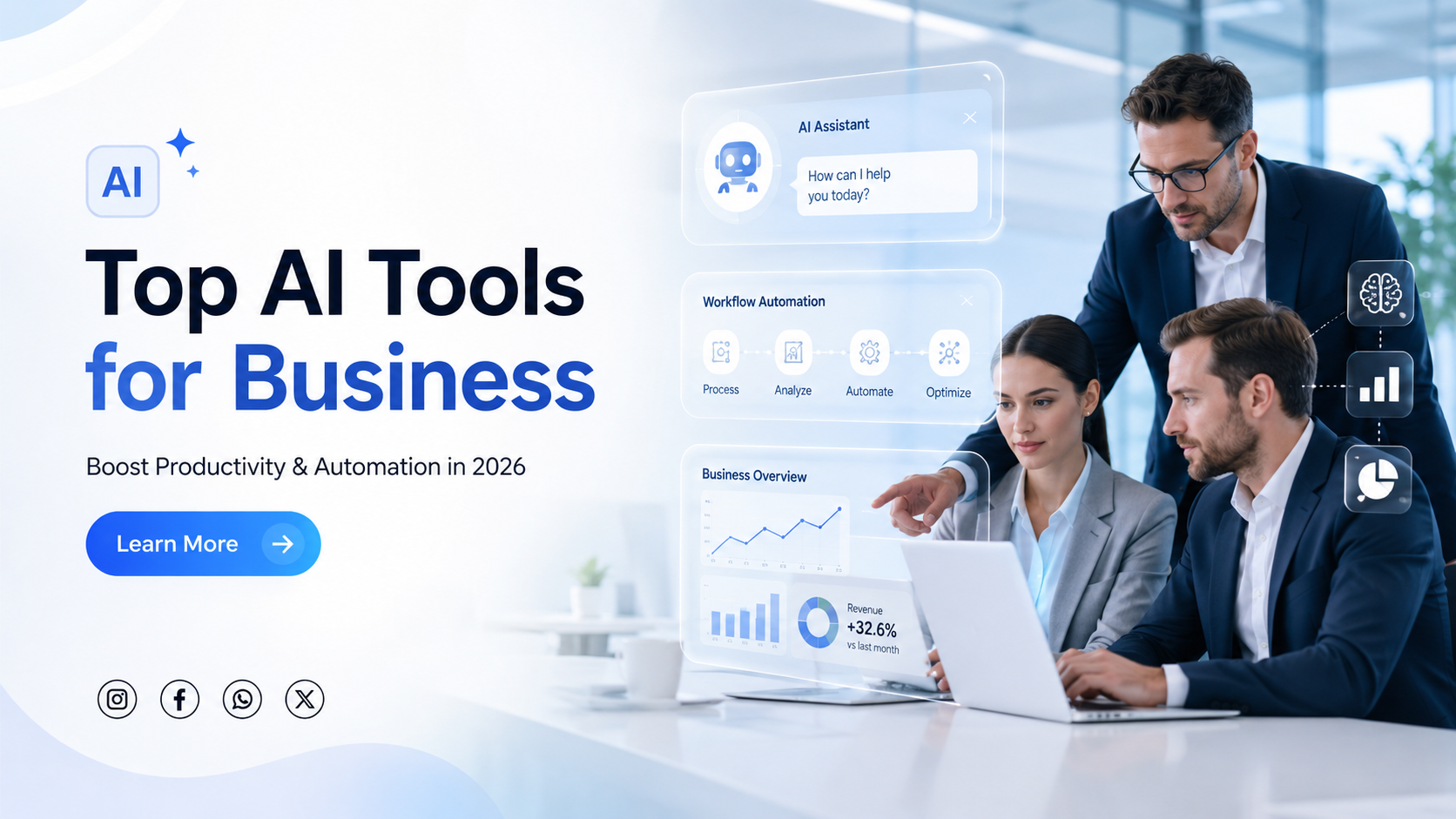
Artificial intelligence is no longer something only large tech companies use. In 2026, businesses of every size are using AI to improve productivity, automate repetitive tasks, reduce operational costs, and make faster decisions. From startups and ecommerce brands to healthcare companies and enterprises, AI tools for business are becoming an essential part of daily operations.
The biggest reason behind this shift is simple. Businesses want to save time, improve efficiency, and stay ahead of competitors. Modern AI software for business can now help teams write content, automate workflows, manage customer support, analyze data, improve communication, and even assist developers with coding.
At the same time, choosing the right AI tools has become more difficult because hundreds of new platforms are entering the market every month. Some tools focus on automation, while others improve collaboration, customer service, sales, or software development.
In this guide, we will explore the best AI tools for business in 2026, how they work, which businesses should use them, and how companies can choose the right AI solutions for long-term growth.
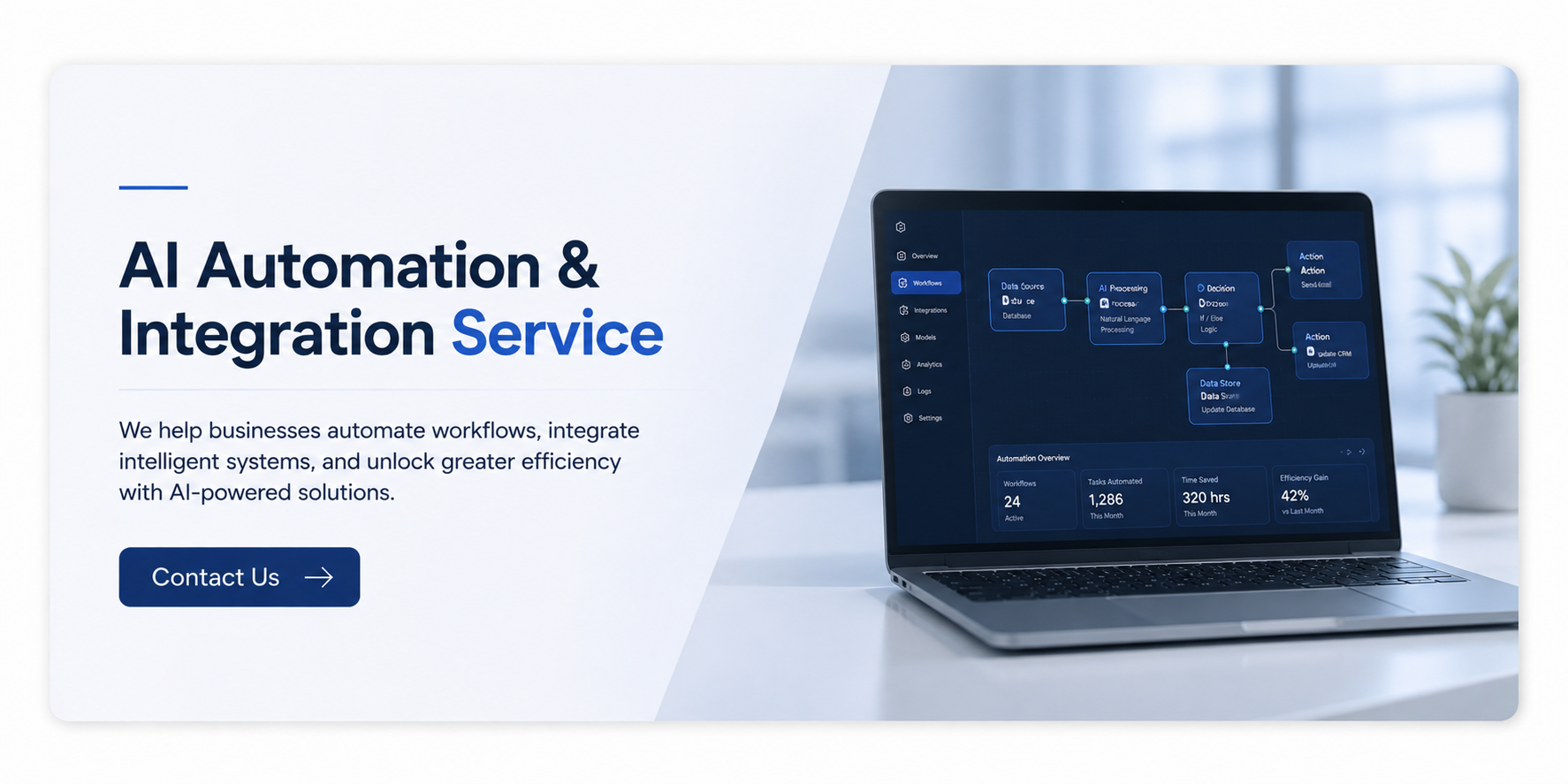
Businesses planning to build scalable AI-driven systems often combine these tools with professional AI integration and automation services from Aimbeat to create customized workflows that align with their operations.
Why Businesses Are Rapidly Adopting AI in 2026
The adoption of AI in business has accelerated significantly over the last few years. What started as simple automation tools has now evolved into intelligent business systems capable of handling customer support, content creation, workflow management, data analysis, and software development.
One of the main reasons businesses are investing heavily in AI tools for business is the growing pressure to improve productivity without increasing operational costs. Companies want faster execution, better customer experiences, and smarter decision-making.
For example, customer support teams are using AI chatbots to handle routine queries 24/7. Marketing teams are using AI-powered content tools to create campaigns faster. Developers are using AI coding assistants to reduce development time. Sales teams are using AI-powered CRM systems to improve lead management and conversions.
Small businesses are also benefiting from AI because modern tools are becoming more affordable and easier to use. Earlier, advanced automation systems were only accessible to enterprises. Today, startups and SMEs can use cloud-based AI software for business without massive investments.
Businesses that fail to adapt to AI-driven operations may struggle to compete in the coming years. Companies are now focusing on automation, digital transformation, and scalable workflows to improve efficiency and customer satisfaction.
Organizations planning digital transformation strategies often combine AI adoption with scalable enterprise software development company solutions to build long-term operational efficiency.

What Makes a Great AI Tool for Business?
Not every AI platform delivers real business value. Some tools look impressive in demos but fail to support practical workflows.
The best AI tools for business in 2026 usually share a few important characteristics.
First, they should solve real business problems. A good AI platform must save time, improve productivity, automate repetitive work, or help teams make better decisions.
Second, the tool should be easy to use. Many businesses avoid AI adoption because employees struggle with complex systems. User-friendly platforms improve team adoption and workflow efficiency.
Third, integration matters. Businesses already use CRM systems, project management tools, communication platforms, and analytics software. The right AI solution should easily integrate into existing workflows.
Scalability is another important factor. Businesses grow over time, so AI software should support increasing users, workflows, and operational complexity.
Security and compliance also play a major role, especially for healthcare, finance, ecommerce, and enterprise organizations handling sensitive data.
Finally, businesses should focus on ROI instead of hype. The best business AI tools are the ones that create measurable improvements in productivity, revenue, operations, or customer experience.
Companies looking to build tailored AI workflows often invest in custom software development instead of relying only on generic tools.
How We Selected the Best AI Tools for Business
To create this list of top AI tools for business, we evaluated platforms based on real-world business usability rather than marketing hype.
We considered factors such as:
- Productivity improvements
- Automation capabilities
- Ease of integration
- Scalability
- Business adoption
- Customer support
- Pricing flexibility
- Team collaboration features
- Workflow optimization
- Security and reliability
The tools included in this guide are suitable for startups, SMEs, enterprises, agencies, ecommerce brands, and software companies.
Quick Comparison of the Best AI Tools for Business in 2026
| AI Tool | Best For | Key Strength |
| ChatGPT | Productivity & content | Multi-purpose AI assistant |
| Claude | Research & writing | Long-form reasoning |
| Gemini | Google ecosystem workflows | Search and productivity |
| Notion AI | Team collaboration | Documentation and organization |
| Zapier AI | Workflow automation | Business process automation |
| HubSpot AI | Sales & marketing | CRM automation |
| GitHub Copilot | Developers | AI coding assistance |
| Perplexity | Research | AI-powered search |
| Jasper | Marketing teams | AI content generation |
| Intercom AI | Customer support | AI chatbot systems |
Best AI Productivity Tools for Businesses
ChatGPT
entity[“company”,”OpenAI”,”AI company”] has completely transformed how businesses use AI for productivity and communication.
ChatGPT is one of the most versatile AI tools for business because it supports multiple use cases. Teams use it for content writing, brainstorming, customer communication, data summarization, workflow planning, coding assistance, and internal documentation.
Marketing teams use ChatGPT to generate blog ideas, email campaigns, and SEO content. Customer support teams use it for response drafting. Developers use it for debugging and code suggestions.
One major advantage is flexibility. Businesses can integrate ChatGPT into workflows, websites, apps, and internal systems.
Companies planning AI-driven workflow systems often integrate tools like ChatGPT into AI automation solutions to improve operational efficiency.
Best For:-
- Content creation
- Team productivity
- Research
- Customer communication
- Workflow assistance
Limitations:-
Businesses should still review outputs carefully because AI-generated responses can sometimes lack context accuracy.
Claude
entity[“company”,”Anthropic”,”AI company”] has positioned Claude as a strong business-focused AI assistant known for detailed reasoning and long-form writing support.
Claude performs especially well for businesses handling research-heavy tasks, documentation, policy writing, summaries, and strategic analysis.
Many businesses prefer Claude for safer and more structured outputs, particularly when working with long documents.
Legal teams, consulting firms, enterprise operations, and research organizations increasingly rely on Claude for productivity support.
Best For:-
- Long-form analysis
- Research workflows
- Documentation
- Enterprise communication
Notion AI
entity[“company”,”Notion”,”Productivity software company”] has become one of the most widely used AI collaboration tools for businesses.
Teams use Notion AI for documentation, project management, meeting notes, knowledge management, and collaboration.
The platform helps businesses centralize information while using AI to summarize tasks, generate content, and organize workflows.
Startups and remote teams particularly benefit from Notion AI because it improves internal communication and workflow visibility.
Best For:-
- Team collaboration
- Internal documentation
- Knowledge management
- Productivity organization
Best AI Marketing Tools for Businesses
Marketing is one of the areas where AI is creating the biggest impact. Businesses are now using AI tools to create content, improve SEO, automate campaigns, manage leads, and personalize customer experiences.
Jasper
entity[“company”,”Jasper”,”AI software company”] is one of the leading AI content platforms for businesses.
Jasper helps marketing teams create blogs, advertisements, email campaigns, landing pages, and social media content faster.
Businesses focused on content marketing often use Jasper to scale content production without sacrificing consistency.
Best For:-
- Content marketing
- Copywriting
- SEO content creation
- Campaign generation
HubSpot AI
entity[“company”,”HubSpot”,”CRM software company”] combines CRM functionality with AI-driven marketing and sales automation.
Businesses use HubSpot AI to manage leads, automate email campaigns, analyze customer behavior, and improve sales workflows.
For growing businesses, combining CRM systems with AI automation creates better lead nurturing and customer engagement.
Businesses looking for scalable CRM automation often invest in CRM software development to create tailored customer management systems.
Best For:-
- Lead generation
- CRM automation
- Email marketing
- Sales optimization
Canva AI
entity[“company”,”Canva”,”Design software company”] has simplified graphic design for businesses using AI-powered creative tools.
Marketing teams use Canva AI to generate presentations, social media graphics, ads, branding assets, and visual content quickly.
Small businesses benefit because Canva reduces dependency on large design teams while improving content creation speed.
Best For:-
- Social media design
- Presentation design
- Branding content
- Visual marketing assets

Best AI Automation Tools for Businesses
Automation is one of the biggest reasons businesses invest in AI.
Modern AI automation tools for business can connect multiple platforms, automate repetitive tasks, improve communication, and reduce manual work.
Zapier AI
entity[“company”,”Zapier”,”Automation software company”] is one of the most popular workflow automation platforms available today.
Businesses use Zapier AI to connect apps and automate processes such as lead generation, email notifications, CRM updates, customer onboarding, and reporting.
Instead of manually managing repetitive tasks, businesses can automate workflows across hundreds of platforms.
Businesses planning advanced workflow systems often combine automation platforms with AI integration and automation services for scalable operations.
Best For:-
- Workflow automation
- Process optimization
- Team productivity
- Cross-platform integrations
Make
entity[“company”,”Make”,”Automation platform”] offers advanced workflow automation capabilities for businesses needing visual automation systems.
The platform supports complex integrations and operational workflows across departments.
Businesses handling ecommerce, logistics, operations, and CRM automation often prefer Make because of its flexibility.
Best For:-
- Advanced workflow automation
- Visual automation systems
- Business process optimization
Microsoft Copilot
entity[“company”,”Microsoft”,”Technology company”] has deeply integrated AI into workplace productivity tools.
Microsoft Copilot helps businesses automate tasks across Word, Excel, Teams, Outlook, and enterprise workflows.
For companies already using Microsoft ecosystems, Copilot improves productivity without requiring major operational changes.
Best For:-
- Office productivity
- Enterprise collaboration
- Workflow assistance
- Business communication
Best AI Customer Support Tools
Customer support is rapidly changing because businesses now expect 24/7 support availability.
AI-powered customer support tools help companies automate conversations, reduce response times, and improve customer satisfaction.
Intercom AI
entity[“company”,”Intercom”,”Customer messaging platform”] provides AI-driven support systems for modern businesses.
Companies use Intercom AI to automate customer communication, onboarding, FAQs, and support ticket handling.
The platform improves customer experience while reducing support workload.
Best For:-
- AI chatbots
- Customer communication
- Support automation
Zendesk AI
entity[“company”,”Zendesk”,”Customer support software company”] combines traditional support infrastructure with AI-powered automation.
Businesses use Zendesk AI to manage support tickets, automate responses, and improve customer service operations.
Best For:-
- Helpdesk automation
- Ticket management
- Customer support workflows
Best AI Tools for Developers and Software Companies
Software companies are among the biggest adopters of AI.
Developers now use AI tools to accelerate coding, debugging, testing, and documentation.
GitHub Copilot
entity[“company”,”GitHub”,”Software development platform”] has transformed software development workflows.
GitHub Copilot assists developers by suggesting code snippets, improving productivity, and reducing repetitive coding tasks.
Development teams using AI coding assistants can significantly reduce development time.
Businesses investing in scalable digital products often combine these tools with SaaS product development company solutions.
Best For:-
- Code generation
- Development productivity
- Debugging assistance
- Faster development cycles
Cursor
entity[“company”,”Cursor”,”AI coding software company”] is becoming increasingly popular among modern developers.
The platform offers AI-assisted coding experiences directly inside development environments.
Developers use Cursor to improve coding speed, understand large codebases, and simplify debugging.
Best For:-
- AI coding workflows
- Developer productivity
- Software engineering support
Replit AI
entity[“company”,”Replit”,”Cloud coding platform”] simplifies collaborative coding and cloud-based software development.
Startups and smaller teams use Replit AI for rapid prototyping and development.
Best For:-
- Rapid development
- Collaborative coding
- Startup product building
Best AI Tools for Startups and Small Businesses
Startups and small businesses often have limited resources, which makes AI especially valuable.
The right AI tools can help small teams achieve more without increasing operational costs.
Startups generally benefit from AI platforms focused on:
- Automation
- Productivity
- Customer support
- Marketing
- CRM management
- Content creation
Tools like ChatGPT, Notion AI, Zapier AI, Canva AI, and HubSpot AI are commonly used because they are scalable and relatively affordable.
Businesses planning long-term growth often combine AI tools with software consulting services to create scalable digital strategies.
Free vs Paid AI Tools: Which Is Better for Businesses?
Many businesses start with free AI tools before upgrading to paid plans.
Free plans are useful for testing platforms, learning workflows, and understanding automation opportunities. However, growing businesses usually require advanced capabilities such as integrations, security, collaboration, analytics, and scalability.
Paid AI tools generally offer:
- Better performance
- Team collaboration
- Advanced automation
- Security controls
- API access
- Workflow integrations
- Higher usage limits
Businesses should focus less on tool pricing and more on long-term ROI.
A platform that saves dozens of hours every month can easily justify its subscription cost.
Biggest Benefits of Using AI Tools in Business Operations
Businesses using AI effectively are experiencing significant operational improvements.
One of the biggest benefits is productivity. AI reduces repetitive work, allowing teams to focus on strategy and growth.
AI also improves customer experiences by enabling faster support, personalized communication, and better service availability.
Marketing teams benefit from faster content creation and campaign optimization. Developers improve software delivery speed. Operations teams automate reporting and workflows.
Another major advantage is scalability. AI-powered systems help businesses grow without proportionally increasing team size.
Companies looking to scale digital infrastructure often invest in enterprise business automation systems combined with custom software development.
Common Mistakes Businesses Make While Using AI Tools
Although AI provides major benefits, businesses still make several common mistakes.
One of the biggest mistakes is adopting too many tools without proper workflow planning. Businesses should focus on solving specific operational problems instead of chasing trends.
Another common issue is ignoring employee training. Teams must understand how to use AI effectively.
Some businesses also rely entirely on AI-generated outputs without human review. AI should support decision-making, not completely replace human expertise.
Security is another critical concern. Businesses handling sensitive data should evaluate compliance and privacy before implementing AI systems.
Companies planning long-term digital transformation strategies often benefit from software consulting services that help align technology decisions with business goals.
How to Choose the Right AI Tool for Your Business
Choosing the right AI software for business depends on your goals, industry, workflows, and operational challenges.
Businesses should first identify the problems they want to solve.
For example:
- Marketing teams may need content automation.
- Ecommerce brands may focus on customer support automation.
- Developers may prioritize AI coding tools.
- Enterprises may require workflow automation and analytics.
- Startups may focus on affordability and scalability.
It is also important to evaluate integration capabilities. AI tools should connect easily with CRM systems, communication tools, project management platforms, and internal workflows.
Businesses planning long-term scalability often benefit from customized software development solutions that align AI systems with operational requirements.
Future of AI Tools for Businesses Beyond 2026
The future of AI in business is moving toward intelligent automation and autonomous workflows.
Businesses are beginning to adopt AI agents capable of handling tasks independently. These systems can analyze data, automate workflows, communicate with users, and make operational recommendations.
Voice AI, multimodal AI, predictive analytics, and AI copilots are also becoming more common.
In the coming years, businesses will increasingly combine AI tools with custom enterprise software systems to create highly scalable digital ecosystems.
Organizations investing early in AI-powered infrastructure are likely to gain major competitive advantages.
Businesses planning future-ready systems often combine AI strategies with scalable web application development and enterprise software solutions.
Frequently Asked Questions About AI Tools for Business
Q1. What are the best AI tools for business in 2026?
Some of the best AI tools for business in 2026 include ChatGPT, Claude, Gemini, Zapier AI, HubSpot AI, GitHub Copilot, Jasper, and Notion AI.
Q2. Which AI tool is best for small businesses?
Small businesses often benefit from tools like ChatGPT, Canva AI, Zapier AI, and Notion AI because they are affordable, scalable, and easy to use.
Q3. Can AI automate business operations?
Yes, AI can automate customer support, workflow management, CRM updates, content creation, reporting, and operational tasks.
Q4. Are AI tools safe for businesses?
Most leading AI platforms provide enterprise-grade security, but businesses should still review privacy policies and compliance standards before implementation.
Q5. Which industries benefit most from AI tools?
Healthcare, ecommerce, logistics, finance, education, manufacturing, and software companies are among the industries benefiting most from AI adoption.
Final Thoughts
AI is no longer optional for modern businesses. Companies that use the right AI tools for business can improve productivity, automate workflows, reduce operational costs, and scale faster.
The best AI tools for business in 2026 are not just helping companies save time. They are transforming how businesses operate, communicate, market, develop software, and serve customers.
However, long-term success depends on choosing the right tools and integrating them strategically into workflows.
Businesses looking to build scalable AI-powered platforms, workflow systems, SaaS products, enterprise software, or automation solutions should focus on customized digital strategies rather than generic implementations.
At Aimbeat, we help businesses create scalable digital systems through AI integration and automation services, custom software development, enterprise software solutions, CRM systems, SaaS platforms, and business automation technologies tailored for long-term growth.


