
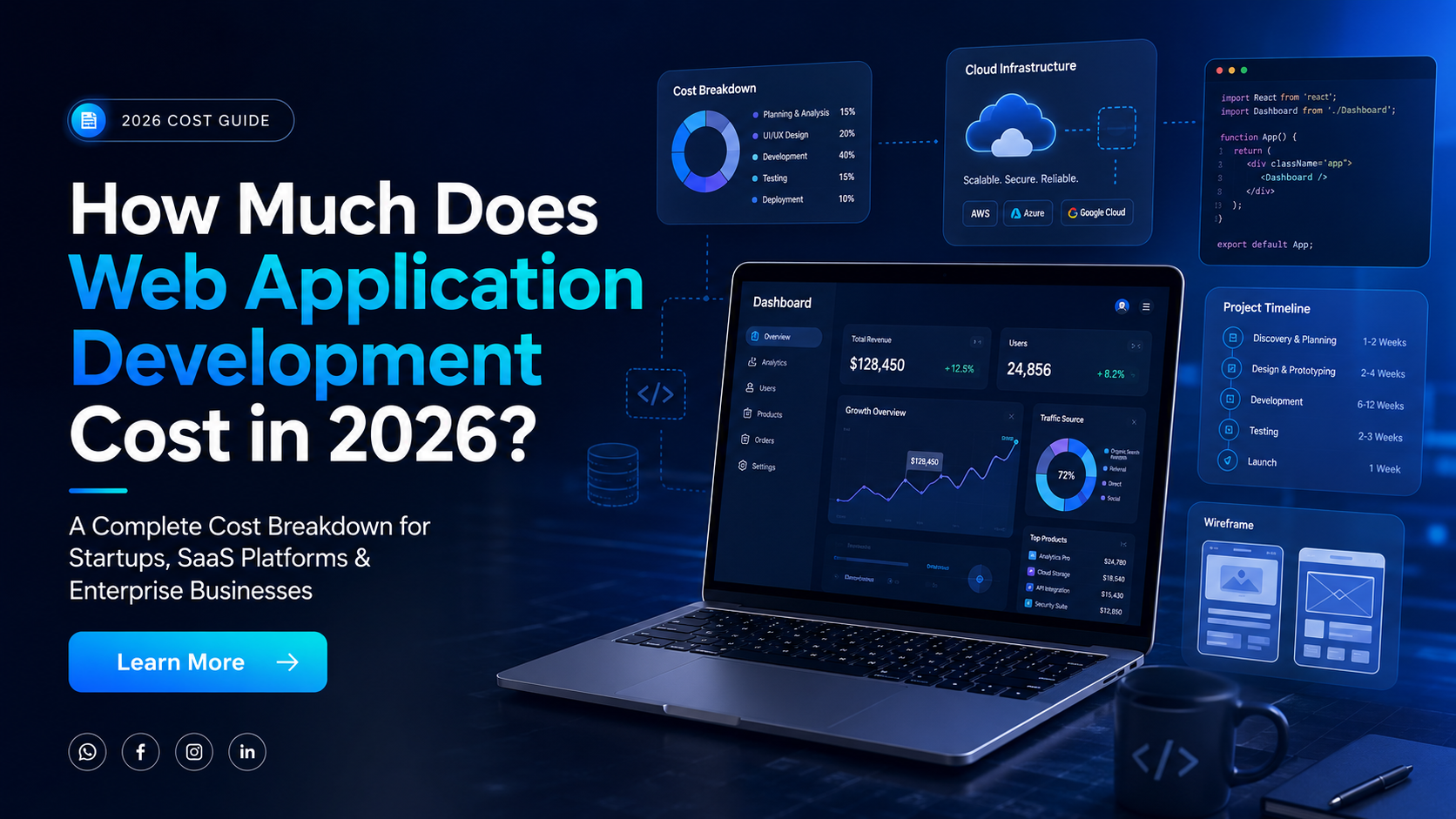
Businesses today rely heavily on digital platforms to manage operations, improve customer experience, automate workflows, and scale faster. Because of this, web applications have become one of the most important investments for startups, growing businesses, and enterprises.
One of the most common questions business owners ask before starting a project is:
“How much does web application development cost?”
The answer depends on several factors, including project complexity, features, design requirements, integrations, scalability needs, and the development approach you choose.
In 2026, web application development cost can range anywhere from $5,000 for a simple MVP platform to $100,000+ for large enterprise-grade solutions with advanced features and integrations.
Whether you are planning to build a SaaS platform, CRM system, ecommerce portal, internal business dashboard, or custom enterprise solution, understanding the complete pricing breakdown helps you make smarter business decisions and avoid unnecessary expenses later.
Businesses investing in scalable and modern custom web application development services are focusing more on long-term flexibility, automation, and growth rather than depending on limited ready-made platforms.
How Much Does Web Application Development Cost in 2026?
The cost of building a web application depends mainly on the size and complexity of the project.
Here’s a simple pricing overview:
| Web Application Type | Estimated Cost Range |
| Basic MVP Web App | $5,000 – $15,000 |
| Medium Complexity Web App | $15,000 – $50,000 |
| Enterprise Web Application | $50,000 – $150,000+ |
A simple web application with login systems, dashboards, and basic workflows costs significantly less compared to enterprise applications that require advanced APIs, automation, cloud infrastructure, analytics, and multi-user scalability.
Businesses researching overall software development cost guide resources often realize that development pricing varies because every business has different goals, workflows, and scalability requirements.
If you are planning to build a region-specific solution, understanding the local app development cost in Mumbai can also help estimate realistic project budgets.

Main Factors That Affect Web Application Development Cost
There is no fixed pricing model for custom web application development because every platform has unique business requirements.
Below are the major factors that influence development cost.
Application Complexity
The more complex your application becomes, the higher the development investment.
For example:
- Simple customer portals cost less
- SaaS platforms cost more
- Enterprise systems require larger budgets
Applications with advanced workflows, analytics dashboards, role management, automation, and real-time functionality naturally require more development hours.
Number of Features
Every feature directly impacts project cost.
Examples include:
- User authentication
- Admin dashboards
- Payment gateways
- Real-time chat
- Notifications
- Reporting systems
- AI integrations
- Analytics
Businesses implementing advanced automation through AI Integration & Automation Services usually require additional backend architecture and API development.
UI/UX Design Requirements
Modern businesses cannot ignore user experience anymore.
Professional UI/UX design includes:
- Wireframes
- User flow planning
- Responsive design
- Interactive interfaces
- Mobile optimization
- Accessibility improvements
Investing in high-quality UI UX Design Services improves engagement, usability, and customer retention over the long term.
Scalability Requirements
If your application is expected to handle thousands of users, cloud infrastructure and backend architecture become more advanced.
Enterprise-grade scalable systems usually require:
- Load balancing
- Cloud optimization
- Security layers
- Database optimization
- Server monitoring
Businesses planning scalable enterprise systems often invest in enterprise software solutions to support future growth properly.
Web Application Development Cost Breakdown by Development Stage
Understanding where the budget goes helps businesses plan projects more efficiently.
Discovery & Planning
This stage includes:
- Business analysis
- Requirement gathering
- Technical planning
- Workflow discussions
- Timeline estimation
This phase is important because proper planning reduces development mistakes later.
Many businesses begin with professional software consulting services before finalizing project scope.
UI/UX Design Cost
Design is not just about appearance.
Good design improves:
- User experience
- Customer retention
- Conversion rates
- Navigation
- Accessibility
Design costs vary depending on:
- Number of screens
- Design complexity
- Animation requirements
- Interactive elements
Frontend Development Cost
Frontend development focuses on what users interact with directly.
This includes:
- Dashboard interfaces
- Forms
- Responsive layouts
- Navigation systems
- User interactions
Modern frontend applications are commonly built using technologies like React because they support scalable and fast interfaces.
Businesses looking for scalable frontend architecture often work with teams that hire ReactJS developers for advanced application interfaces.

Backend Development Cost
Backend development handles:
- Databases
- APIs
- Authentication
- Business logic
- Security
- Server management
Complex backend systems usually require more development time.
Popular backend technologies include:
- Node.js
- Python
- Django
- Laravel
Depending on project requirements, businesses may choose to hire NodeJS developers or work with teams specializing in scalable backend systems.
API Integration Cost
Modern applications often connect with third-party services like:
- Payment gateways
- CRM software
- Email platforms
- Analytics tools
- Chat systems
Integrations with services like Stripe may increase development complexity depending on security and workflow requirements.
Testing & Quality Assurance
Testing ensures the platform works properly across:
- Devices
- Browsers
- User roles
- Traffic conditions
Skipping QA often creates larger expenses later.
Database & Cloud Infrastructure Cost
Every web application needs secure and scalable infrastructure.
This includes:
- Hosting
- Databases
- Storage
- Backup systems
- Security monitoring
Cloud providers like:
- Amazon Web Services
- Google Cloud
- Microsoft Azure
are commonly used for scalable business applications.
Businesses planning long-term scalability often combine cloud infrastructure with reliable website hosting services for better performance and uptime.
Web Application Development Cost by Project Type
Different types of web applications require different development approaches.
Ecommerce Web Application Cost
Ecommerce applications often include:
- Product management
- Payment systems
- Order tracking
- Inventory management
- Customer accounts
Businesses planning scalable online stores often invest in ecommerce website development company solutions for better customization and flexibility.
You can also explore advanced custom ecommerce development approaches depending on your business model.

SaaS Web Application Cost
SaaS platforms usually require:
- Subscription systems
- Multi-user management
- Cloud architecture
- Billing systems
- Advanced scalability
Building scalable SaaS platforms requires strong technical planning and architecture.
Businesses planning subscription-based products often work with a professional SaaS product development company for long-term scalability.
CRM & ERP Software Cost
CRM and ERP systems are more complex because they manage internal business operations.
These applications may include:
- Lead management
- Workflow automation
- Reporting systems
- Employee management
- Customer tracking
Businesses implementing operational automation often choose specialized CRM software development services or scalable ERP software development solutions based on their workflow requirements.
MVP vs Enterprise Web Application Cost
One of the smartest ways to reduce development cost is starting with an MVP.
What is an MVP?
An MVP (Minimum Viable Product) focuses only on essential features required to launch the product.
If you are new to MVP planning, this guide on what is MVP in software development explains the concept in detail.
Startups often choose MVP development because it:
- Reduces initial investment
- Speeds up launch
- Helps validate ideas
- Minimizes risks
Many businesses use an effective MVP development strategy before investing in large-scale systems.
Enterprise Web Applications
Enterprise applications are significantly more advanced.
They usually include:
- Large databases
- Multi-department workflows
- Advanced security
- Automation
- High scalability
- Integration ecosystems
Large organizations investing in digital transformation often require advanced enterprise software development strategies for long-term operational efficiency.
Freelancer vs Agency Pricing Comparison
Businesses often compare freelancers and software development agencies before starting a project.
Freelancers
Freelancers may offer:
- Lower initial pricing
- Flexible hourly models
- Small project support
However, challenges may include:
- Limited scalability
- Communication gaps
- Long-term support limitations
Software Development Agencies
Agencies generally provide:
- Dedicated teams
- Project management
- UI/UX specialists
- QA testing
- Scalability planning
- Ongoing support
Working with an experienced software development company in Mumbai can help businesses manage complex projects more efficiently.
Hidden Costs in Web Application Development
One of the biggest mistakes businesses make is ignoring hidden expenses.
Common hidden costs include:
- Maintenance
- Hosting
- Security updates
- Scalability upgrades
- Third-party subscriptions
- Cloud infrastructure
- Bug fixing
- Performance optimization
Many businesses underestimate the long-term impact of outdated systems until they experience operational issues. This guide on hidden costs of outdated software explains these challenges in detail.
Post-launch maintenance is equally important, which is why businesses invest in reliable software support and maintenance services after deployment.

How to Reduce Web Application Development Cost Without Compromising Quality
Reducing cost does not mean compromising quality.
Smart planning is the key.
Start With an MVP
Avoid building unnecessary features initially.
Launch with core functionality first.
Prioritize Features
Focus only on features that solve real business problems.
Many startups overspend because they try to build everything at once.
This article on common software feature mistakes startups avoid explains why feature prioritization matters.
Choose the Right Development Partner
Experienced teams help avoid:
- Technical mistakes
- Budget overruns
- Scalability issues
- Delays
Businesses researching development partners often evaluate how to choose the right development partner before starting large projects.
Plan Before Development Starts
Proper planning reduces:
- Scope changes
- Development confusion
- Timeline delays
- Unexpected costs
Businesses managing large software projects often benefit from structured software project consulting before development begins.
Why Businesses Invest in Custom Web Applications
Ready-made software may work temporarily, but many businesses eventually outgrow generic platforms.
Custom web applications provide:
- Better scalability
- Workflow flexibility
- Custom integrations
- Business automation
- Long-term control
This is one reason many companies move toward web development solutions instead of depending entirely on off-the-shelf tools.
Businesses comparing approaches can also explore the difference between custom software vs off-the-shelf software before making technology decisions.
Final Thoughts
Web application development cost in 2026 depends on much more than just coding.
The final budget is influenced by:
- Features
- Design
- Infrastructure
- Scalability
- Integrations
- Security
- Business goals
A small MVP web application may require a limited budget, while enterprise-level platforms need advanced architecture and long-term planning.
The most important thing is choosing the right strategy from the beginning.
Businesses that focus on proper planning, scalable architecture, and experienced development teams usually achieve better long-term results and avoid unnecessary redevelopment costs later.
If your business is planning a scalable digital platform, investing in professionally planned web application development can create long-term operational and growth advantages.
Frequently Asked Questions (FAQs)
Q1. How much does web application development cost in 2026?
Web application development cost in 2026 can range from $5,000 for basic MVP platforms to $100,000+ for enterprise-grade applications depending on features, integrations, scalability, and project complexity.
Q2. What affects web application development pricing?
Major factors include:
- App complexity
- Features
- UI/UX design
- APIs
- Cloud infrastructure
- Security
- Scalability
- Development timeline
Q3. How long does it take to build a web application?
Simple MVP applications may take 2–3 months, while enterprise platforms can require 6–12 months or longer depending on complexity.
Q4. What is the cost of building a SaaS web application?
SaaS web application development cost varies based on subscription systems, user management, integrations, and cloud scalability requirements.
Q5. Why are custom web applications expensive?
Custom applications require planning, architecture, frontend development, backend systems, testing, security implementation, and long-term scalability support.
Q6. How can businesses reduce software development costs?
Businesses can reduce development cost by:
- Starting with an MVP
- Prioritizing essential features
- Planning properly
- Choosing scalable technologies
- Working with experienced development teams


